Around lunchtime on 28 April 2025, Jorge Luis Hernandez, an IAEA senior nuclear safety officer, started to receive phone calls from relatives and friends in Spain telling him that a blackout had knocked out electricity across the country, bringing trains and metro systems to a grinding halt, disabling ATMs and shuttering businesses.
A glance at a news channel confirmed that a massive power cut had struck Andorra, Portugal and Spain, affecting Spain’s five nuclear power plant sites. Four reactors at Almaraz, Ascó and Vandellós were automatically shut down by the outage, joining three others that were already off-line. The shutdown was a safety precaution to protect the reactors from damage caused by fluctuations in voltage and frequency on the electrical grid. Diesel backup generators were activated to power safety systems, ensuring a controlled shutdown and continued cooling of the reactors.
Even though backup systems at nuclear power plants are highly reliable, contingency plans need to be in place for the unlikely scenario that a backup system fails, creating a potential radiological risk.
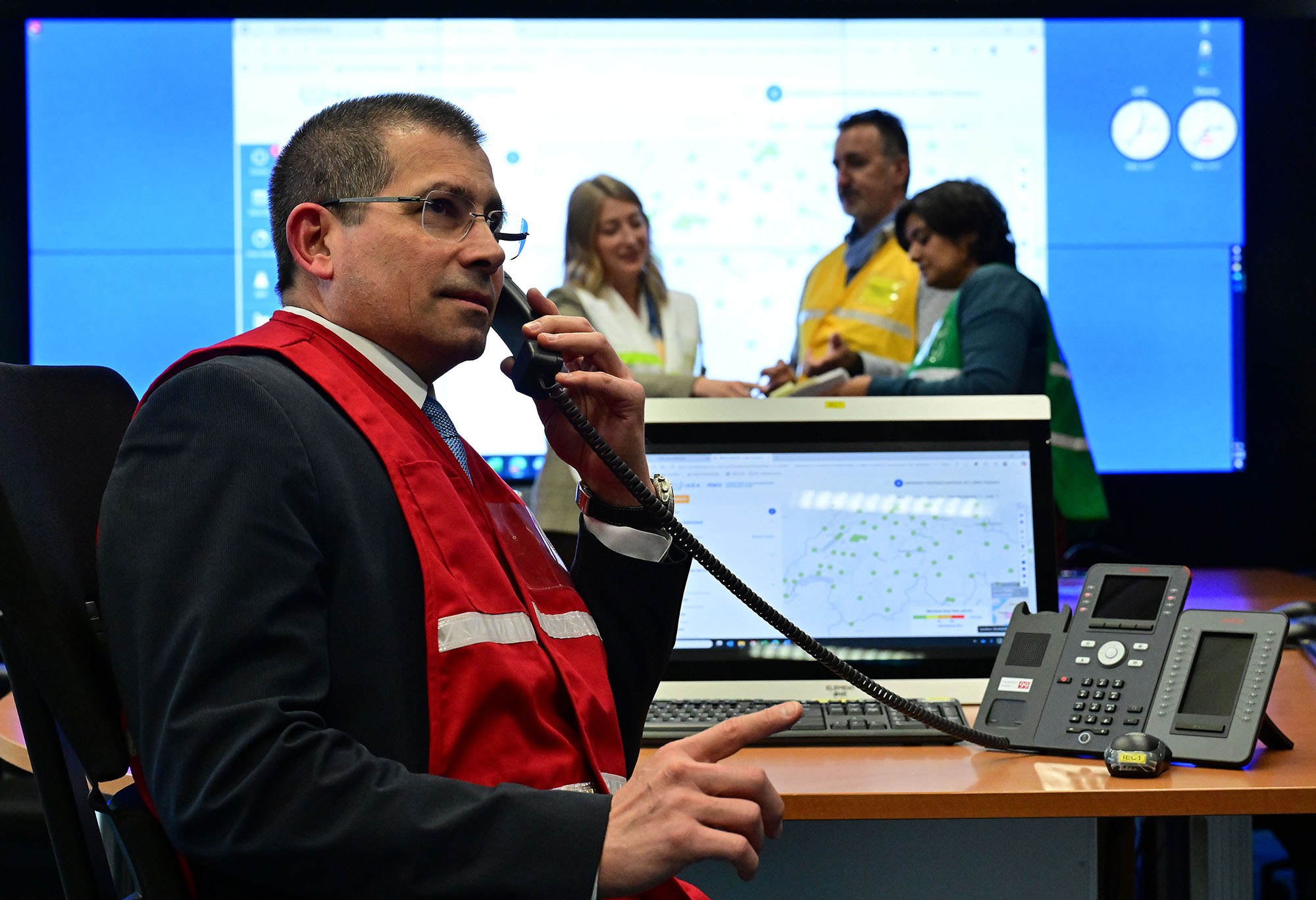
With the news from Spain, Jorge knew exactly what to do. He is also an IAEA emergency response manager, a trained volunteer who spends eight weeks a year on call, day and night. When he is on call, Jorge must be ready to activate the IAEA’s Incident and Emergency Centre (IEC) at any time. The IEC is the global focal point for international emergency preparedness, communication and response to nuclear and radiological incidents and emergencies.
Jorge immediately alerted other IAEA volunteer emergency responders on call to be on standby in case the IEC needed to be activated. Within one hour of the news breaking about the blackout, he had contacted a counterpart in Spain and drafted an initial report to reassure the public and decision makers in Spain and its neighbouring countries that the situation was under control.
One of the IEC’s critical roles during a crisis is to provide reliable and accurate information. This involves using trained technical experts to assess the situation, anticipate how the emergency might evolve, and determine the most effective response strategies.
“With social media and artificial intelligence, disinformation can spread faster than facts,” said Jorge. “It can have a negative effect on decision makers and response efforts, creating panic and making the public lose trust in the authorities. That’s why the IAEA’s role, actively engaging with counterparts and giving the public and officials accurate information, is so important.”
As there was no immediate risk from Spain’s nuclear reactors, the IEC was not activated. However, Jorge remained hard at work with other IAEA volunteer emergency responders, helping to coordinate public statements and inform counterparts in countries concerned about the potential for cross-border radiological release. The IAEA also received offers of assistance. “Ukraine contacted us and offered to help Spain re-establish the grid, as they are well experienced with blackouts in their country,” Jorge explained.
He continued to deal with the incident until 3.30 a.m., when he was finally able to go to bed. Interrupted nights are nothing new for Jorge, who said he is woken up one or two nights a week during routine volunteer shifts as an emergency response manager. Sometimes he is woken up by the automated IAEA earthquake report system, which informs him about any seismic activity with the potential to impact nuclear installations or major cities.
Yet Jorge said it was worth enduring sleepless nights to provide such a vital service. “The IEC has built up an agile system that can respond at short notice to any event. We can be called into action to do anything, from finding a lost radioactive source to responding to accidents at nuclear facilities,” Jorge said. “Countries around the world rely on our unique systems to keep their national authorities and the public informed and to provide assistance if there is a nuclear emergency. At the IEC we can really make an impact.”
Jorge’s primary role as an IAEA senior safety officer focuses on nuclear installations and safety standards, which provide the fundamental principles, requirements and recommendations to ensure nuclear safety around the world. Originally from Cuba, he speaks English, French and Spanish, which is useful for delivering training on nuclear design safety standards and carrying out technical safety reviews of nuclear reactors in countries around the world.
“I have practical experience with different reactor designs that I can draw upon to understand how an emergency might progress,” said Jorge. “I have worked in the Incident and Emergency System as a nuclear installation specialist, as a technical team leader, and I have even stepped in as a public information officer and held other roles when necessary during international emergency response exercises,” he added. “It is a team effort. You are not born an emergency response manager, it comes from practice, preparation and training.”