<dd id="rw0xn"></dd>

  • <label id="rw0xn"></label>

  • <sup id="rw0xn"><strike id="rw0xn"></strike></sup><label id="rw0xn"></label>
      <th id="rw0xn"></th>
    1. <var id="rw0xn"></var>
        1. <table id="rw0xn"></table>

          <sub id="rw0xn"><meter id="rw0xn"></meter></sub>

          New IAEA-FAO Research Project on Radiolabelled Studies for Food Safety

          New Coordinated Research Project

          New IAEA-FAO research project supports global standards for food-producing animals to protect food safety and support fair trade.

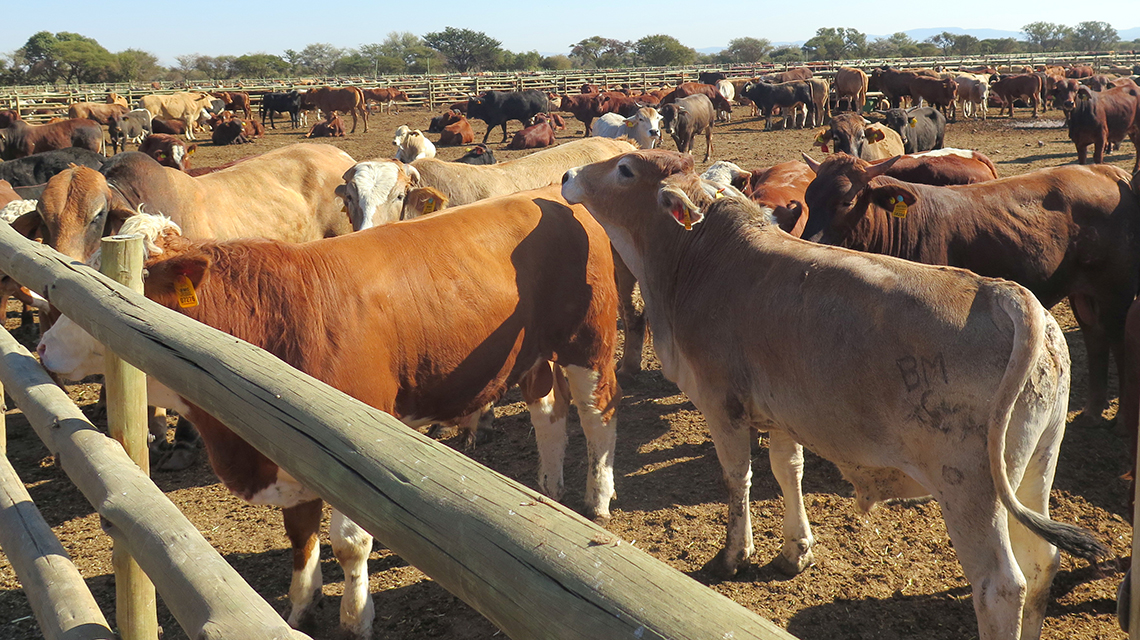
          Science-based residue standards help ensure safe mutton for consumers worldwide. (Photo: J. Sasanya/IAEA)

          As global efforts to secure food intensify, production is on the rise. This growth has increased the prevalence of animal and plant diseases and pests. As a result, producers frequently rely on veterinary drugs and pesticides, sometimes as the only viable option to protect animal health and crops. However, the chemicals in these solutions can leave residues in food, posing health risks and trade challenges that require strict control.

          To protect consumers, ensure the proper use of agrochemicals and support fair trade, national and international risk managers, including the FAO/WHO Codex Alimentarius, work to establish harmonized regulatory standards such as Maximum Residue Levels (MRLs). Their work depends on robust scientific evidence, including data from radiolabelled-compound studies   that track how drug and pesticide depletion occurs in food-producing animals. However, limited availability of such data remains a major bottleneck.

          As the international risk assessors, the Joint FAO/WHO Expert Committee on Food Additives has repeatedly flagged these gaps, particularly the absence of findings on total radioactive residues. Closing these gaps is essential for effective consumer protection and global food security.

          Without such data, the establishment of MRLs remains a challenge, slowing consumer protection measures and disrupting trade among countries. 

          Addressing Data Gaps Through Coordinated Research

          One way to close these critical gaps is through targeted research using radiolabelled studies in food-producing animals, covering a range of veterinary drugs and related dual-use substances.

          To address this need, the IAEA, in cooperation with the Food and Agriculture Organization of the United Nations (FAO), through the Joint FAO/IAEA Centre of Nuclear Techniques in Food and Agriculture, is launching a new coordinated research project (CRP) titled ‘Radiolabelled Food Animal Depletion Research for Food Safety Standards-Setting; Associated Radioisotope Production and Radiosynthesis’. The CRP is expected to start in 2027, although an earlier start is possible, with research proposals invited in 2026.

          The scientific and commercial demand for studies on MRLs remains high, particularly those studies investigating metabolism and residue depletion kinetics of numerous drugs. Currently, over 300 veterinary drugs and pesticide compounds used in food producing animals are on the Codex priority list of substances to be assessed. This demand, together with Codex Alimentarius’ call for international support in standards setting, has driven the creation of the new CRP.

          This project aims to enhance the contribution of Member countries to the development of food safety standards through innovative research based on radiolabelled-compounds in food producing animals. It will focus on drugs and pesticides labelled with suitable radioisotopes such as C-14, H-3, I-125, Na-22, N-15, P-32, S-35 and Zn-65, among others.

          A key component of the project is improving access to materials for radiolabelling and synthesis, encouraging local production alongside commercial sources. Research will examine administration, distribution, metabolism and excretion of these substances, as well as their presence in edible tissues. Fit-for-purpose radiometric analytical techniques, including liquid scintillation counters, high purity germanium detectors, and complementary techniques will be applied to generate reliable data.

          The CRP also aims to: 

          • conduct radiolabelled and complementary food-producing animal studies for priority veterinary pharmaceuticals and associated pesticides (dual-use substances)

          • develop, validate or implement fit-for-purpose analytical methods in line with relevant international guidelines

          • ensure availability and, where possible, local production of targeted radioisotopes by institutions in or associated with food safety, for use in radiolabelled depletion studies supporting standards-setting processes

          • radiolabel or radiosynthesize selected veterinary pharmaceuticals and related substances (including pesticides) in collaboration with food safety institutions to facilitate targeted depletion studies

          • report and disseminate research findings to support global food safety standards and regulatory harmonization.

          How to join

          The project will be open to up to 15 research contracts and five or more research agreement holders, offering Member States and other interested partners the opportunity to participate.

          Research organizations interested in joining the CRP must submit their Proposal for Research Contract or Agreement by email, no later than 30 June 2026, to the IAEA’s Research Contracts Administration Section, using the appropriate template on the CRA web portal.  The same template can be used for both research/technical contracts and research agreements by indicating the type in the form.  The IAEA encourages institutes to involve women and young researchers in their proposals.

          For further information related to this CRP, potential applicants should use the contact form under the CRP page.

          <dd id="rw0xn"></dd>

        2. <label id="rw0xn"></label>

        3. <sup id="rw0xn"><strike id="rw0xn"></strike></sup><label id="rw0xn"></label>
            <th id="rw0xn"></th>
          1. <var id="rw0xn"></var>
              1. <table id="rw0xn"></table>

                <sub id="rw0xn"><meter id="rw0xn"></meter></sub>
                97碰成人国产免费公开视频