
<dd id="rw0xn"></dd>


The Agency’s Atoms4NetZero initiative aims to provide policymakers and decision makers with net zero energy scenario modelling that takes into account the full potential of nuclear power to contribute to net zero emissions. The first Global Stocktake, agreed at COP28, recognized the need to accelerate the deployment of low-emissions technologies such as nuclear power.
In July 2024, the Agency held a workshop on modelling the contribution of nuclear power to net zero transitions and in August 2024, a joint IAEA–Argonne National Laboratory training course brought together experts in the use of energy planning tools, including the Agency’s Model for Energy Supply Strategy Alternatives and their General Environmental Impacts (MESSAGE). In addition, a country case study to model Estonia’s net zero transition using MESSAGE was developed in collaboration with the University of Tartu.
At the 68th regular session of the General Conference, the Agency organized a side event entitled ‘Powering the Future through Atoms4NetZero’, involving modelling teams from Argentina, Estonia, Ghana, Indonesia, Kenya, Nigeria and Tunisia that use Agency tools and methodologies. Countries that have been trained in the use of MESSAGE are also independently developing net zero scenario analyses, such as the work on carbon neutrality presented by the Republic of Korea at the fourth meeting of the Technical Working Group on Nuclear Power in Low-Carbon Energy Systems in December 2024.
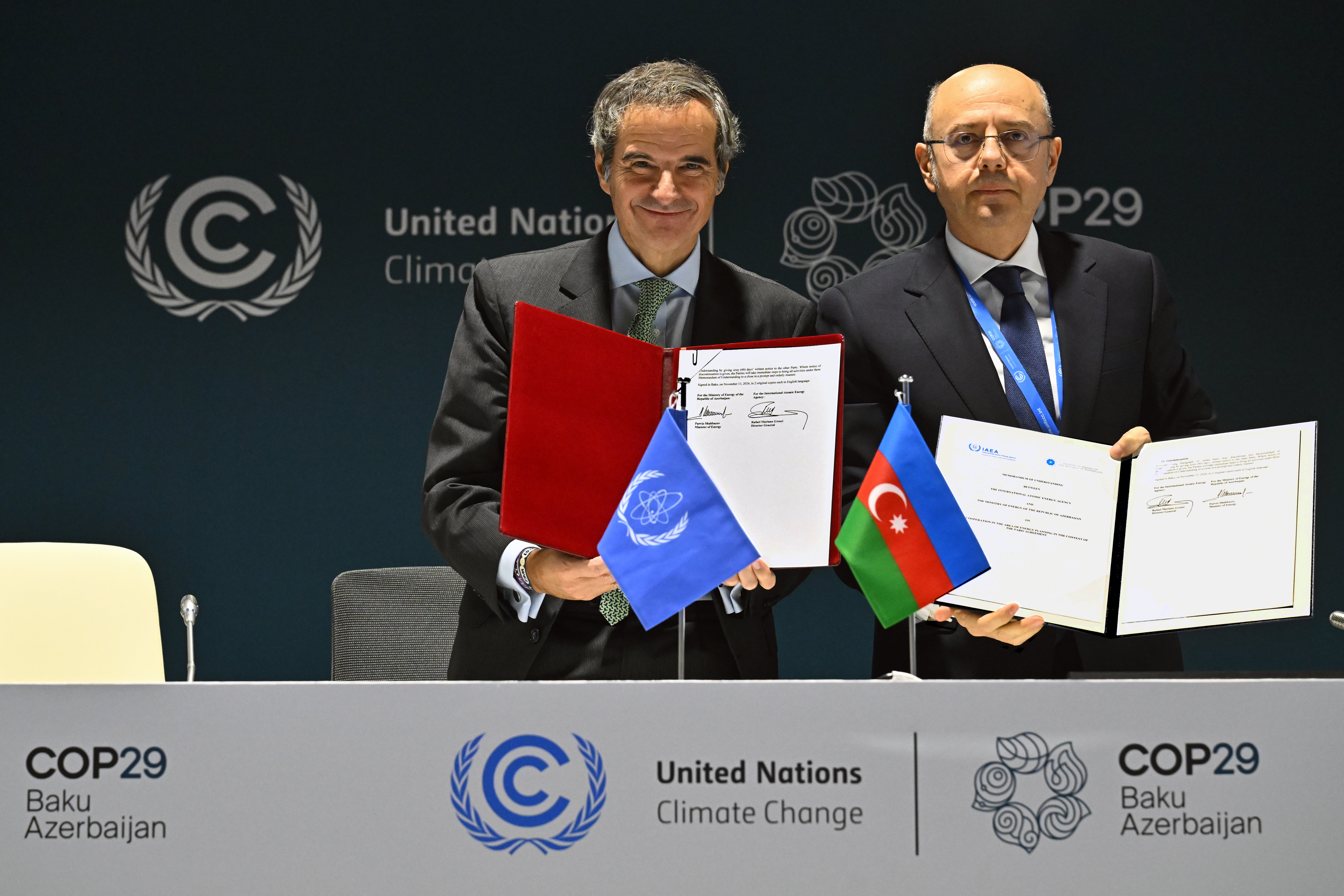
In September 2024, the Agency signed Practical Arrangements with the China National Nuclear Corporation, which include cooperation under the Atoms4NetZero initiative. And at COP29 in November 2024, the Agency signed a memorandum of understanding with the Ministry of Energy of Azerbaijan on cooperation in the area of energy planning in the context of the Paris Agreement, according to which a joint analysis will be conducted under Atoms4NetZero on the role of nuclear energy, including small modular reactors, in Azerbaijan’s clean energy transition.


<dd id="rw0xn"></dd>