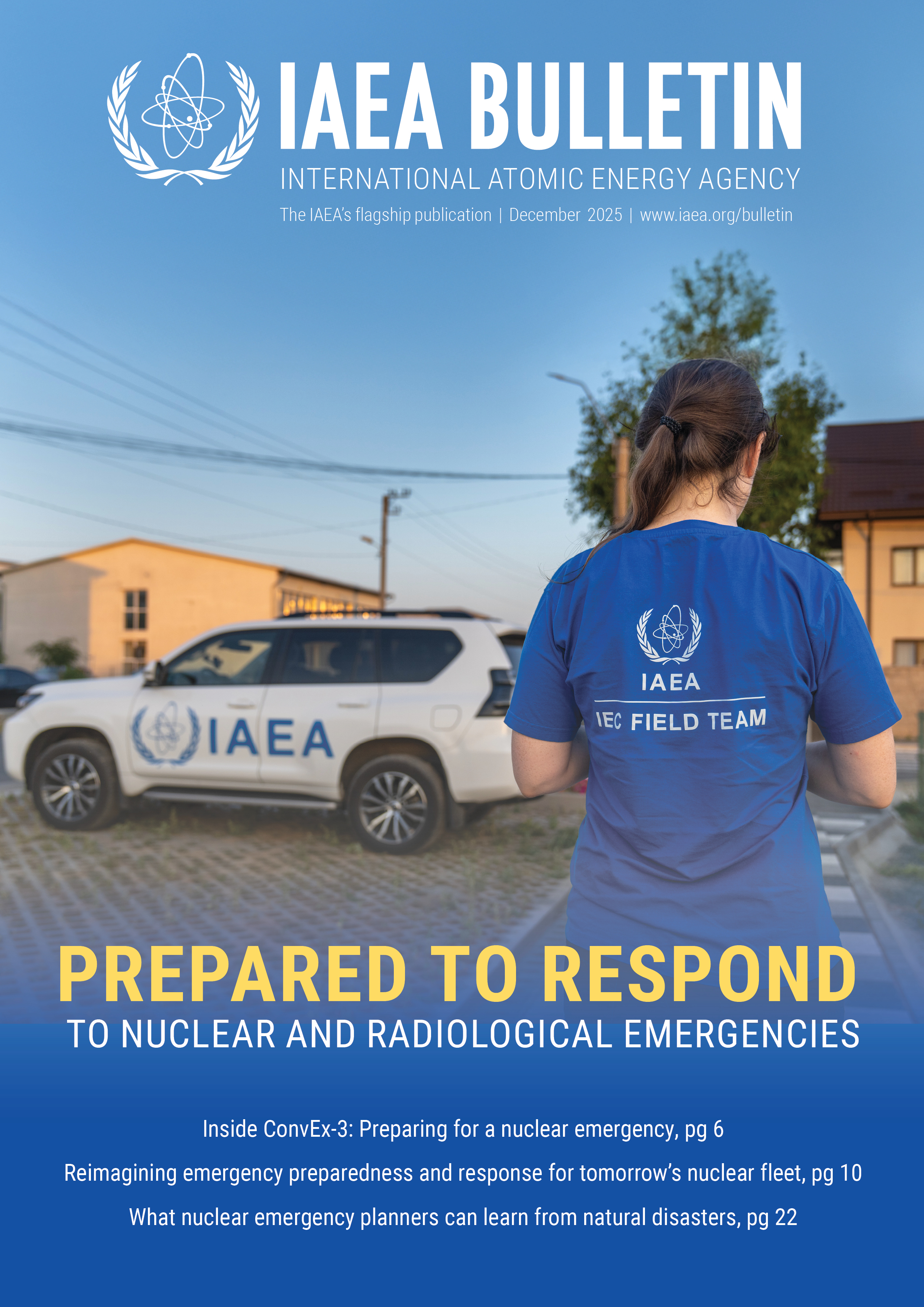
Preparedness for nuclear and radiological emergencies is not a nice-to-have, it’s a necessity. From cyber-attacks to climate extremes and geopolitical instability, today’s risk landscape is more complex than ever. But our response is not one of alarm, it’s one of resolve, innovation and cooperation. Emergency preparedness and response (EPR) is about building trust in institutions, resilience in systems and safety for people, before an emergency ever occurs.
Over the past two decades, the international community has made remarkable progress in developing a global framework for preparedness and response. The IAEA has played a central role in that transformation. IAEA guidance, peer reviews and training programmes are strengthening national systems and building regional and global coherence. The two international conventions on early notification and on assistance adopted following the 1986 Chornobyl accident provide the legal and practical foundation for how countries share information and request help during nuclear or radiological incidents. As new threats emerge and technologies evolve, the conventions remain relevant and adaptable, helping countries coordinate effectively and act with confidence.
Preparedness is not limited to countries with nuclear power plants. As this issue of the IAEA Bulletin shows, nations without operating reactors must also be ready to detect and manage radiological risks. In Liberia, for example, a potentially serious situation involving a radioactive source at a major hospital was resolved quickly and safely thanks to rapid international support coordinated by the IAEA. That experience not only averted a potentially harmful situation, it inspired a deeper national commitment to EPR, including steps to join the conventions and strengthen domestic capabilities. Moments like these remind us that preparation saves lives, builds important response capacities and fosters long-term resilience.
The IAEA is innovating. From virtual reality and artificial intelligence used in training, to integrated safety-security planning for small modular reactors, we are supporting countries in adopting forward-looking approaches. This reflects a broader truth: preparedness evolves alongside technology, policy and public expectations. It also relies on people. From first responders and emergency managers to regulators and communicators, preparedness depends on skilled professionals and the networks that connect them. That’s why the IAEA invests in capacity building, and why we promote inclusive participation, including youth engagement and cross-sector collaboration.
No single country can handle every nuclear or radiological scenario in isolation. Radiation knows no borders. Whether it is a cross-border incident, a contaminated food shipment or a public misinformation campaign, a collective response is a stronger response. IAEA platforms such as the Response and Assistance Network and the Unified System for Information Exchange ensure that help can be requested and provided quickly, and that countries are speaking with one voice when every word counts.
As I have stressed in my briefings at the IAEA and the United Nations Security Council, nuclear safety and emergency preparedness are not optional. They are non-negotiable commitments that underpin the peaceful uses of nuclear technology. They are the basis on which we earn the public’s trust, and tools that build confidence between nations.
The theme of the international conference on nuclear and radiological emergencies, to be held in Riyadh, Saudi Arabia, in December, is “Building the Future in an Evolving World”. That future will include new technologies, new risks and new opportunities. By preparing together, guided by science, solidarity and shared responsibility, we help to ensure that the future will be safer for everyone.