An urgent call alerts Thailand’s authorities that four radioactive sources have gone missing. When a truck triggers a radiation alarm at the Padang Besar checkpoint at Thailand’s border with Malaysia, an attempt to smuggle the stolen sources across the frontier is thwarted.
This fictitious scenario marked the beginning of MITSATOM, a large-scale multilateral preparedness exercise held in Southeast Asia in July 2025. Driven by a common quest to strengthen nuclear security at their maritime and land borders, Indonesia, Malaysia, Singapore and Thailand joined forces to test cross-border collaboration and communication in recovering radioactive sources.
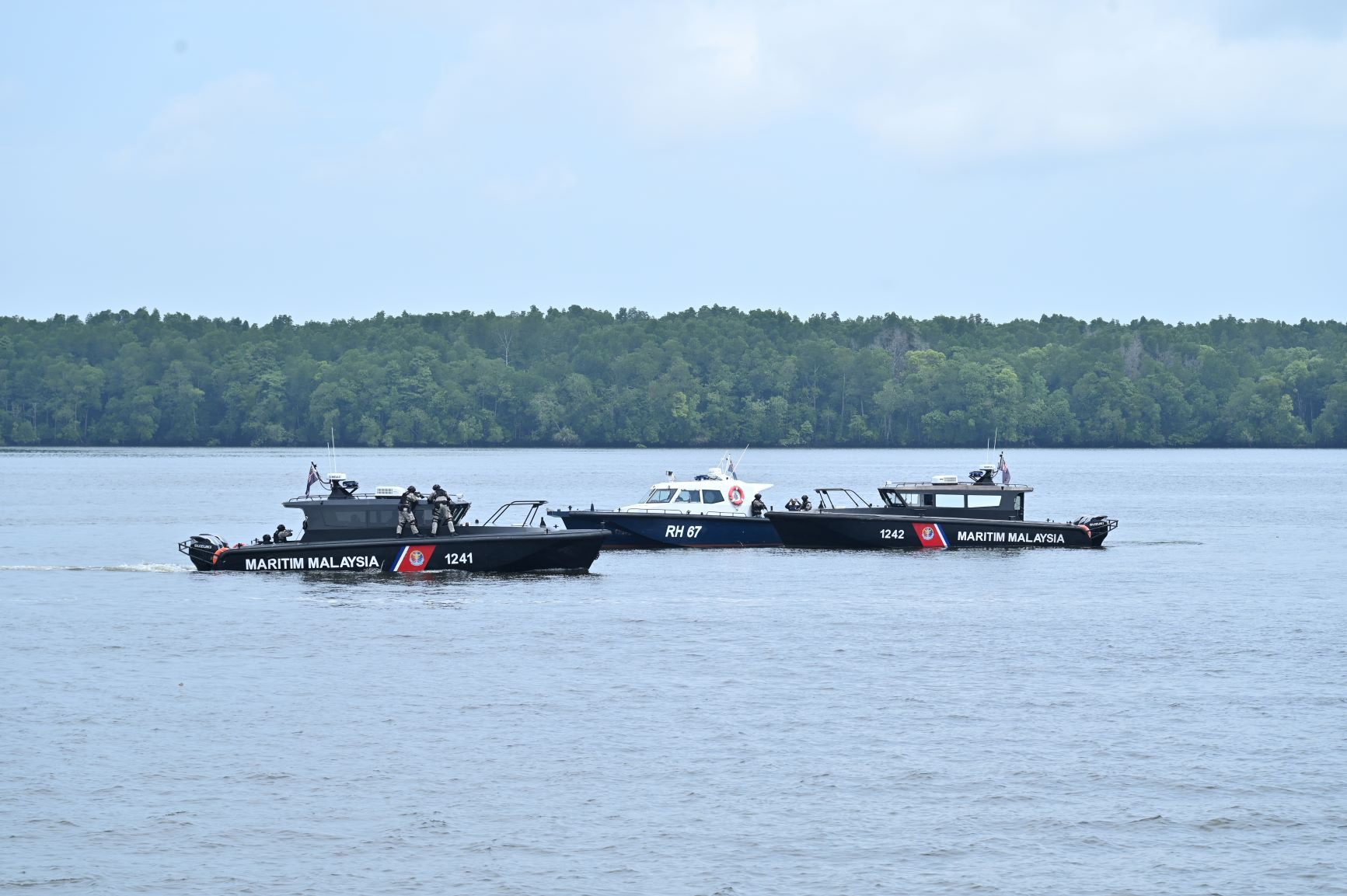
Hosted by the Department of Atomic Energy Malaysia with the IAEA’s support, MITSATOM aimed to enhance the coordinated response to track, detect and secure smuggled radioactive sources. Ministries, nuclear regulatory authorities, police, coastguard, customs and other competent authorities from the participating countries worked closely to assess and strengthen their preparedness for detecting and responding to cross-border nuclear security threats. The exercise provided a realistic training environment that activated security protocols, testing operational readiness and interagency coordination.
“Regional cooperation and coordination are crucial to advancing nuclear security at borders, whether at sea or on land,” said Elena Buglova, Director of the IAEA’s Division of Nuclear Security. “The IAEA supports international and regional initiatives that foster collaboration between neighbouring countries to ensure they are well prepared to take rapid action in the event of a cross-border nuclear security incident.”
The IAEA has a central role in strengthening the nuclear security framework globally and in coordinating international cooperation in nuclear security activities. Its nuclear security programme is designed to assist countries, upon request, in meeting the requirements of legally binding and non-binding international instruments, and to establish and maintain effective national nuclear security regimes.
According to the MITSATOM scenario, a regional criminal group stole four radioactive sources from an authorized storage site in Thailand. They planned to move the sources to Malaysia by land, and then on to Singapore and Indonesia by sea using small boats. Thai authorities intercepted one source at the land border crossing with Malaysia, Malaysian authorities snared another in Malaysian waters before entering Singapore, and Indonesian authorities interdicted the third radioactive source in their territorial waters. Singapore authorities intercepted the fourth source at the land border checkpoint with Malaysia.
Malaysia: Building resilience and trust
Due to its proximity to critical maritime routes — the Strait of Malacca and the South China Sea — Malaysia is a key junction for global shipping and trade. Its national authorities viewed the joint exercise as a collective effort to build mutual trust, elevate regional capabilities, and reinforce the resilience of Southeast Asia’s maritime security framework against nuclear security threats.
“As the host of MITSATOM 2025, Malaysia benefits from first-hand exposure to diverse operational practices, enhanced interagency coordination domestically, and valuable experience in managing complex, real-time scenarios,” said Monalija Kostor, Deputy Director General of the Department of Atomic Energy Malaysia.
Indonesia: Enhancing capabilities
With over 17 000 islands, Indonesia’s extensive coastline and the high volume of shipping traffic passing through its waters make it vulnerable to illicit activities, including smuggling of nuclear and other radioactive material.
“Strengthening nuclear security measures at maritime borders is a regional and international imperative,” said Wita Kustiana, Coordinator for Licensing of Non-Reactor Nuclear Installations at Indonesia’s Nuclear Energy Regulatory Agency. “Participating in exercises is a crucial part of Indonesia’s strategy to enhance its capabilities for detection and response as well as public communication.”
Recently, the IAEA provided Indonesia with detection equipment to enhance the coastguard’s ability to detect and respond to nuclear security threats in territorial waters.
Singapore: A proactive approach
Singapore also occupies a geostrategic position at the crossroads of major international maritime routes. Officers from Singapore’s National Environment Agency and the Immigration and Checkpoints Authority responsible for the security of land, air and sea border checkpoints took part in MITSATOM 2025 together with the police force.
“With growing interest in nuclear energy across Southeast Asia, ASEAN countries have been collaborating closely to build capabilities, establish robust safety standards and enhance emergency response coordination and cooperation,” said Tan Yoke Ping, Assistant Director of Singapore’s Nuclear Science and Technology Department. “This proactive approach ensures the region remains ready and resilient in an evolving landscape.”
Thailand: International collaboration is essential
Ensuring effective border controls to prevent illicit trafficking of nuclear and other radioactive material through its maritime borders is a priority for Thailand, which is home to several major ports that are critical nodes in international shipping.
“This exercise has contributed to a safer and more secure region,” said Rungrueng Kitphati, Director General of the Department of Science Service and Acting Secretary General of the Office of Atoms for Peace. “Thailand is committed to enhancing nuclear security at its maritime borders through cooperation with the IAEA and partner nations in the region. We look forward to further collaboration in achieving our shared goals.”