
In many countries people’s health and livelihoods depend on food production and food exports are often a major contributor to the economy. Ensuring that food is safe, authentic and of good quality is, therefore, vital both domestically and for international trade. An important challenge to the food supply that has emerged over recent years and has become a major problem globally is food fraud, the substitution of authentic foods or food components with cheaper, unknown and potentially dangerous adulterants.
The socio-economic impacts of food fraud are difficult to quantify, but clearly present significant challenges to attaining the UN Strategic Development Goals. Food fraud threatens the delivery of safe and sustainable food supplies, which undermines progress toward the sustainable development goal of zero hunger (SDG2). Illicit trade in agri-foods and food fraud also undermine ‘robust and resilient’ agricultural markets that support economic development and poverty reduction, hitting SDG1 ‘no poverty’, and increases the risk of exposing consumers to harmful ingredients or diluting active beneficial ingredients, threatening SDG3 ‘good health and wellbeing’.
Food fraud is estimated to cost the global food industry US$ 10-15 billion per year (IFIS, 2016), though some estimates are significantly higher - the World Customs Organisation estimate in 2004 was US$ 50 billion. While many incidents of illegal agri-food activity are associated with economic, environmental and sustainability losses, there are equally as many instances where food fraud has had disastrous effects on health and well-being (SDG 3).
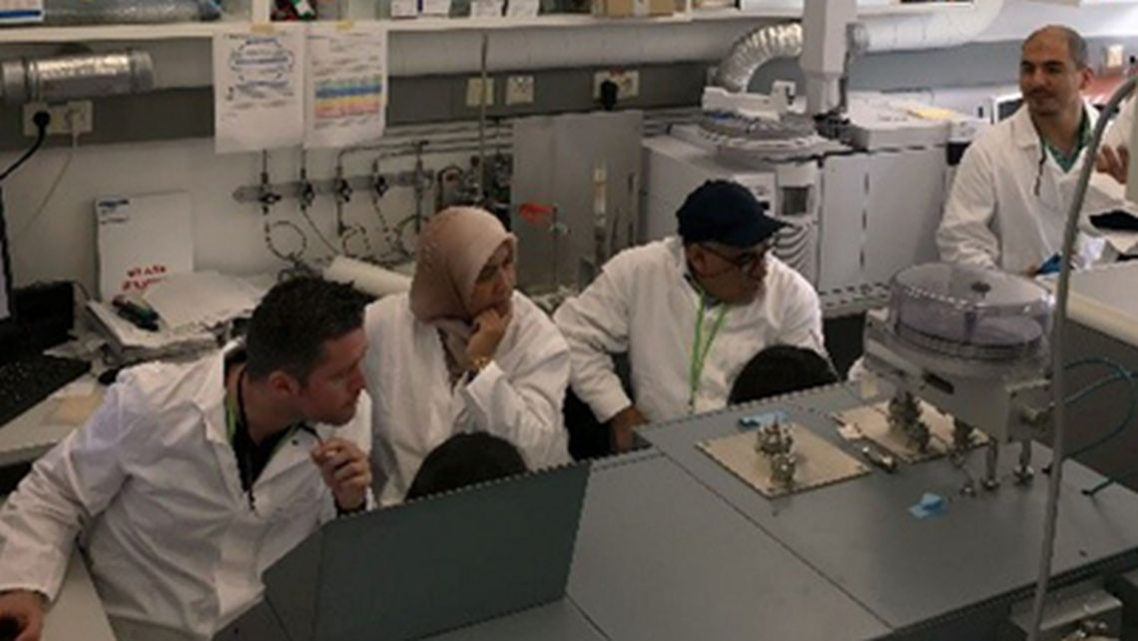
Over the past decade, the Food and Environmental Protection subprogramme of the Joint FAO/IAEA Programme on Nuclear Techniques in Food and Agriculture has responded to increased Member States’ demands to improve their capabilities to deal with issues such as food fraud and food authenticity. Research has been carried out in the Joint Centre’s Food and Environmental Protection Laboratory (FEPL) and through coordinated research with laboratories in Member States, with the goal of developing analytical methods for food authentication that can be incorporated into food control systems to strengthen food safety and security and protect consumers and industry from health risks and fraudulent practices.
To effectively respond to these increasingly challenging threats to the integrity of Member States’ food supplies, the results of research into nuclear and related techniques must be useable and integrated in to food control systems. Generally, it is difficult to translate the results of the research into actual applications in the food supply chain and to visualise their impact. However, the innovative approaches of FEPL in this field have been of concrete benefit to more than 25 countries to date and the methodology continues to be further developed and refined, its scope broadened, and taken up and applied by other countries. Impacts include the integration of nuclear, isotopic and related methodology into food control systems, food quality schemes and regulatory standards; bringing food testing capabilities closer to the field with rapid and simple screening methods; forging of important links between research and industry with respect to geographical origin traceability and authenticity; building awareness of the issues related to food fraud and the role of nuclear techniques in controlling the problems, and baselining data on food fraud and its control to facilitate targeted research and capacity building. Some specific examples follow: