<dd id="rw0xn"></dd>

  • <label id="rw0xn"></label>

  • <sup id="rw0xn"><strike id="rw0xn"></strike></sup><label id="rw0xn"></label>
      <th id="rw0xn"></th>
    1. <var id="rw0xn"></var>
        1. <table id="rw0xn"></table>

          <sub id="rw0xn"><meter id="rw0xn"></meter></sub>

          Universities Launch Nuclear Law Courses with IAEA Support

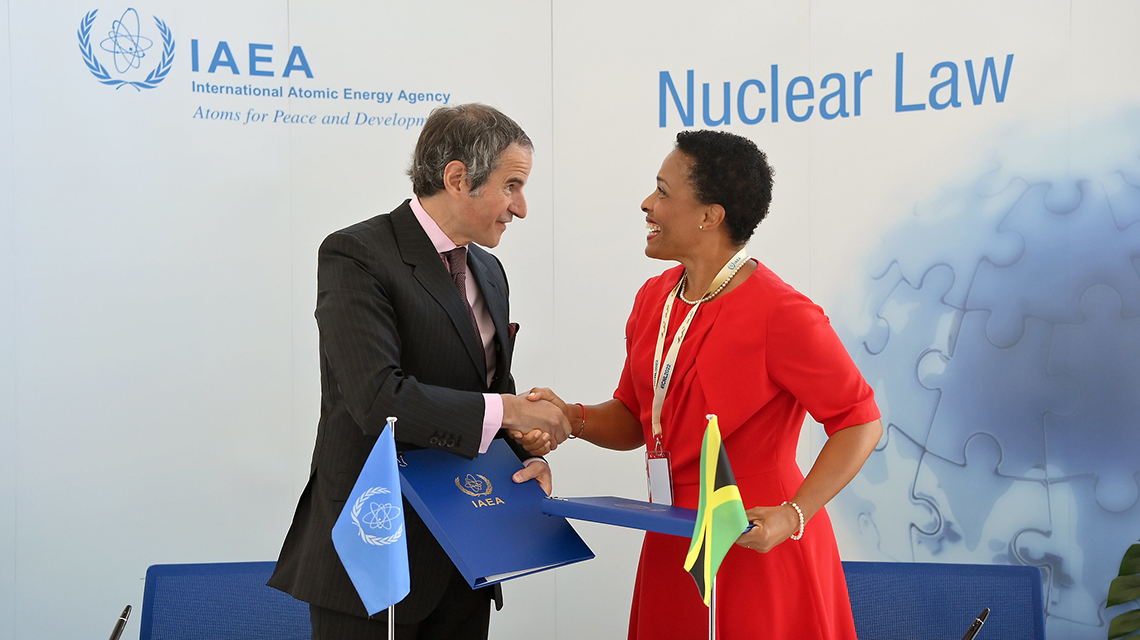
          IAEA Director General Rafael Mariano Grossi expounding his vision of the University Partnership Programme at the launching and signing ceremony, April 2022. (Photo: D. Calma/IAEA)

          Six universities across Africa, Asia, Latin America and the Caribbean now offer postgraduate courses in nuclear law with support from the IAEA, expanding legal education in the nuclear sector.

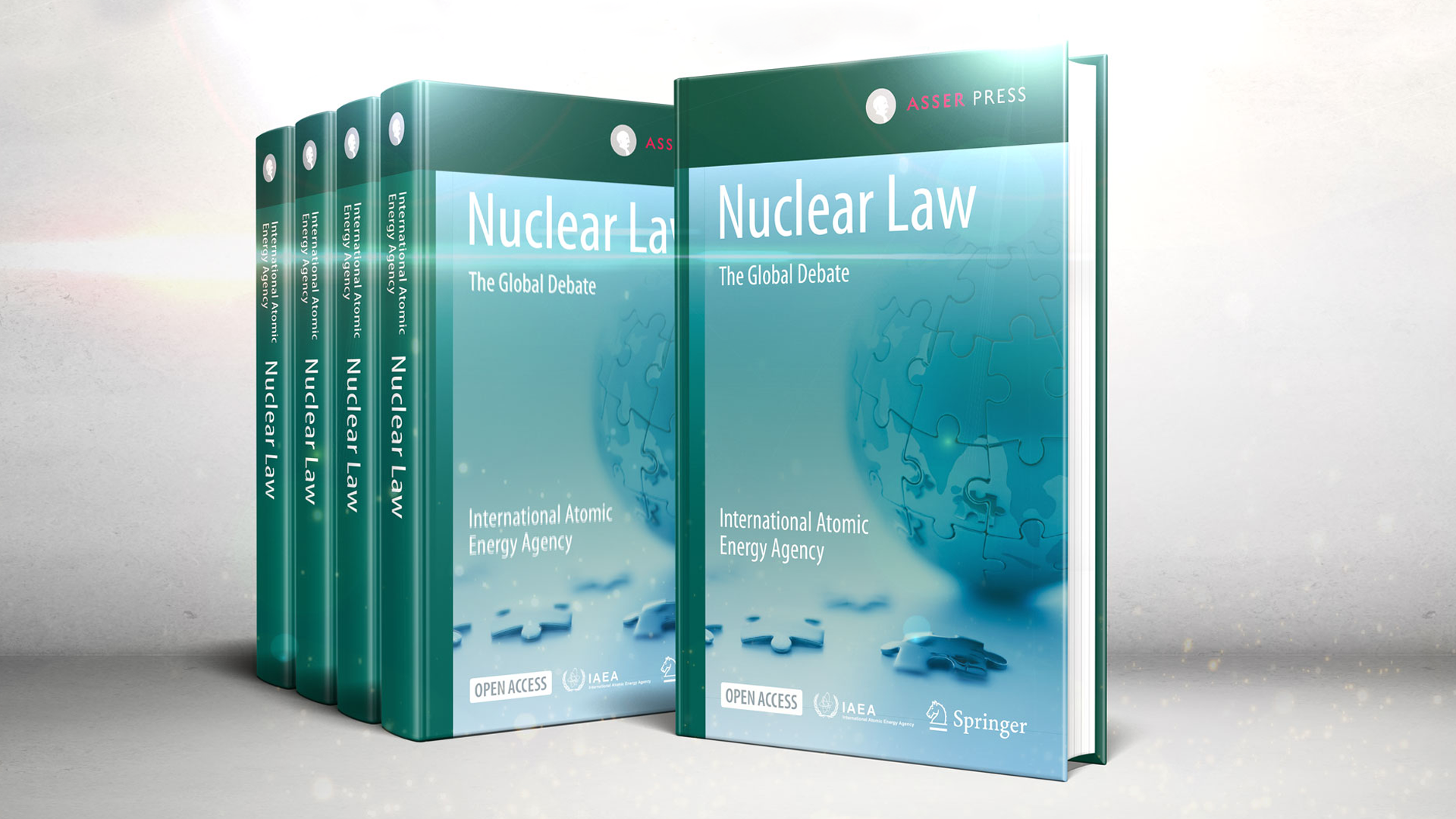
          The Alexandria University in Egypt, Institute of Nuclear Engineering in Brazil, Khalifa University in the United Arab Emirates, University of Buenos Aires in Argentina, University of the West Indies in Jamaica and the University of the Witwatersrand in South Africa offer postgraduate courses in nuclear law taught by their own faculty staff as part of their standard curricula.  This became possible through the IAEA’s University Partnership Programme on Nuclear Law (UPP), a pilot initiative launched by Director General Rafael Mariano Grossi in 2022 when he signed partnership arrangements with the six universities at the IAEA’s First International Conference on Nuclear Law: The Global Debate.

          “This opens up a new chapter for the teaching of nuclear law,” said IAEA Director General Rafael Mariano Grossi, “I congratulate our partner institutions on successfully launching their courses and commend their commitment to providing a comprehensive and academically rigorous programme that is widely accessible to students and professionals. Education is key to development, and training generations of professionals in nuclear law is both essential and an enabling factor for the safe, secure and peaceful use of nuclear energy.”
          IAEA’s Role in Capacity Building

          Since the inception of nuclear law, a widening gap has emerged between its growing importance  and the limited number of academic programmes available at universities and higher-education  institutions. Beyond specialised workshops and seminars for select audiences, there is a pressing need for academic programmes that can offer in-depth training at scale to meet the demands of a rapidly expanding energy sector. 

          The UPP helps to fill that gap. Nuclear law now forms part of standard university academic programmes, with increasing cohorts of learners and researchers in the field. Since the launch of the Programme, the IAEA has supported partner universities in capacity-building and course development by training professors and teaching staff, designing syllabi, developing teaching methodology and providing teaching materials. The  initiative’s goal is to ensure that universities can deliver nuclear law courses independently and to the highest academic standards within their national educational systems.

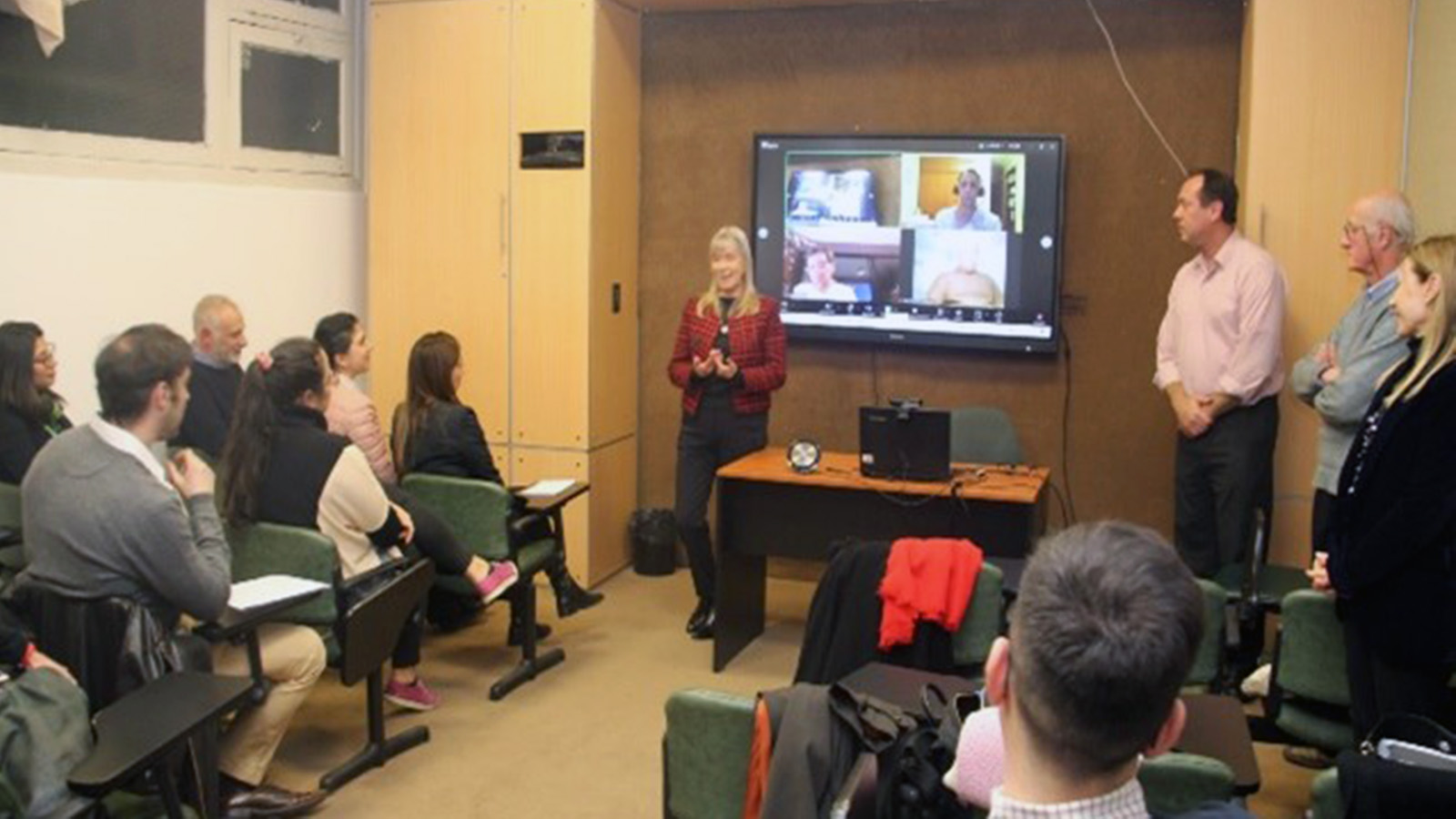
          The University of Buenos Aires was the first to launch its postgraduate course in nuclear law in May 2024 and is now running its second session. As of 30 October 2025, the other five partner institutions have also launched their courses.

          “The creation of the Diploma in Nuclear Law at the University of Buenos Aires embodies a forward-looking commitment to cultivating a new generation of legal experts who, in line with the IAEA’s mission, will ensure that the peaceful uses of nuclear energy advance human development, international security, and the rule of law in a responsible and sustainable manner,” said Emiliano J. Buis, professor and course coordinator at the School of Law, University of Buenos Aires, Argentina. 

          The first session of the nuclear law course at the University of Buenos Aires, Argentina, May 2024.

          Other academic leaders have also echoed their appreciation for the timeliness and need for the programme. 

          For Alexandria University in Egypt, the new postgraduate course in nuclear law “is critical for enhancing awareness and understanding of the legal frameworks regarding peaceful uses of nuclear science and technology and is ideal for regulatory bodies, industry professionals and legal practitioners working in this field,” said Walid El-Barky, professor and Dean of the Faculty of Engineering, Alexandria University, Egypt.

          In Brazil, the nuclear law course at the Institute of Nuclear Engineering is taught by Brazilian professors who are specialists in nuclear law and regulation. Many of them have been trained by the IAEA, both in law and in technical matters. “The Institute regards this initiative as a successful and pivotal starting point for consolidating legal expertise within Brazil's nuclear sector and beyond,” said R?mulo de Castro Souza Lima, professor and course coordinator at the Institute of Nuclear Engineering of the National Nuclear Energy Commission, Brazil.

          In the UAE, “the nuclear law course at Khalifa University draws students with technical and legal backgrounds from across the region, providing a foundation in law for nuclear technology deployment,” said Fran?ois Foulon, professor and course coordinator at the Department of Mechanical and Nuclear Engineering, Khalifa University, UAE.  

          At the University of the West Indies, the graduate-level course in nuclear law prepares students to navigate the complex intersections of law, science, and sustainable development. “The launch of the course positions our university as a regional leader in advancing legal education in one of the most consequential fields of our times,” said Ramona Biholar, Deputy Dean (Graduate Studies and Research) and course coordinator, Faculty of Law, The University of the West Indies on Mona Campus, Jamaica.

          Natalie Zimmelman, Chief Executive Officer, Wits Plus, University of the Witwatersrand, South Africa, said that the nuclear law short course, launched as part of the UPP, “is critical to ensuring the safe, secure and peaceful uses of nuclear technology and aligns with the university’s strong commitment to civic action and responsibility.” 

          Global Impact

          The initiative operates within the framework of the IAEA Legislative Assistance Programme, supported by the Technical Cooperation Programme. Through this framework, the IAEA helps governments adhere to and implement international legal instruments in the nuclear field and develop national legal frameworks and train officials.  

          More information on the University Partnership Programme can be found here:  University Partnership Programme on Nuclear Law.


          <dd id="rw0xn"></dd>

        2. <label id="rw0xn"></label>

        3. <sup id="rw0xn"><strike id="rw0xn"></strike></sup><label id="rw0xn"></label>
            <th id="rw0xn"></th>
          1. <var id="rw0xn"></var>
              1. <table id="rw0xn"></table>

                <sub id="rw0xn"><meter id="rw0xn"></meter></sub>
                97碰成人国产免费公开视频