<dd id="rw0xn"></dd>

  • <label id="rw0xn"></label>

  • <sup id="rw0xn"><strike id="rw0xn"></strike></sup><label id="rw0xn"></label>
      <th id="rw0xn"></th>
    1. <var id="rw0xn"></var>
        1. <table id="rw0xn"></table>

          <sub id="rw0xn"><meter id="rw0xn"></meter></sub>

          In Fukushima’s Evacuated Zone, International Experts Train for Effective Nuclear Emergency Response

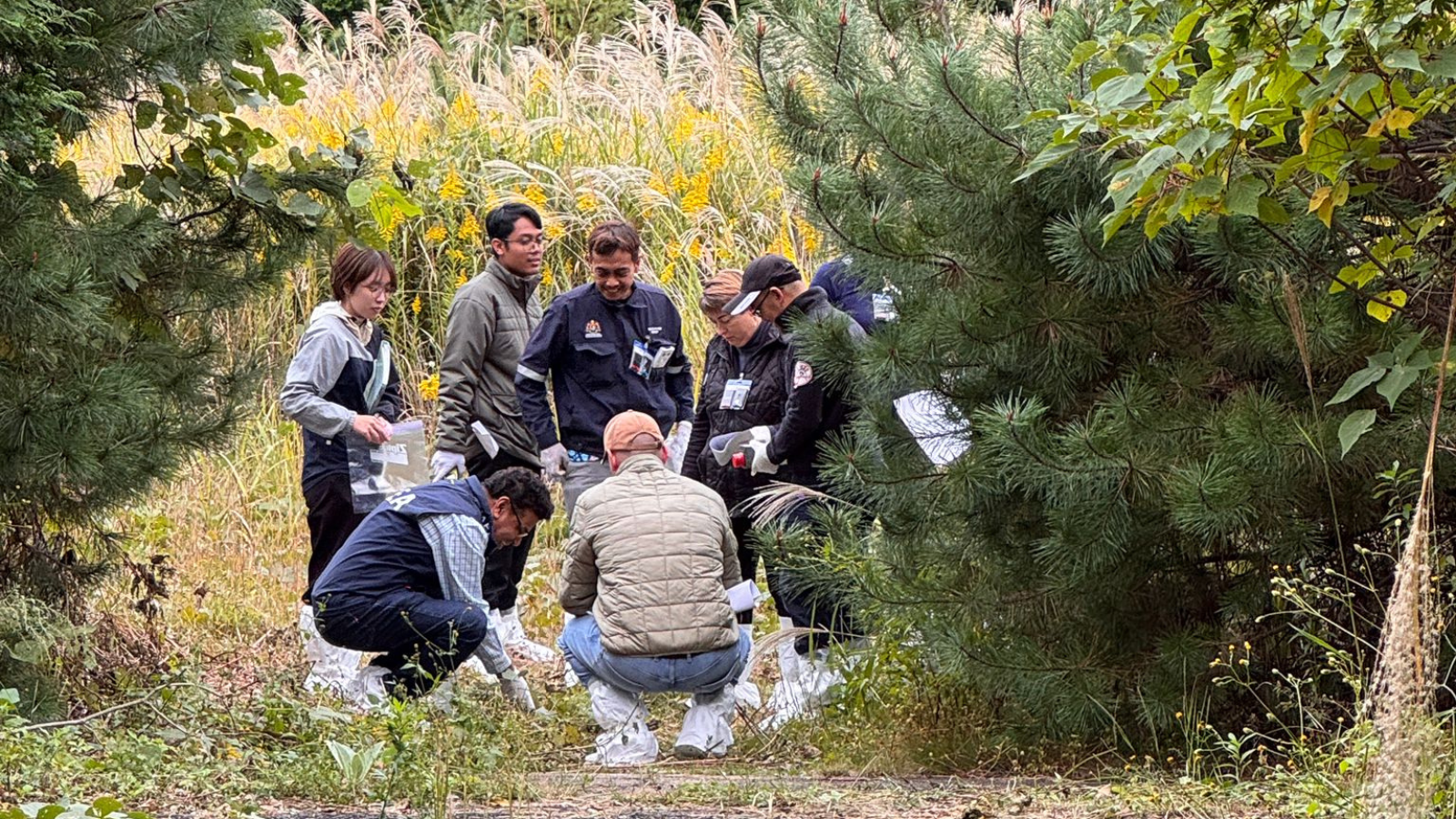
          Workshop participants receive guidance on field sampling techniques in a formerly inhabited area. (Photo: IAEA).

          In Fukushima Prefecture, the region which experienced a nuclear accident at Fukushima Daiichi Nuclear Power Station in 2011, emergency response specialists from Ukraine, Southeast Asia and Australia converged for a week-long IAEA technical training on radiological emergency monitoring.  

          The workshop, funded by Japan’s Ministry of Foreign Affairs as part of its support to Ukraine, focused on strengthening international cooperation and prioritized Ukrainian participation, reflecting the country’s need for advanced emergency preparedness and response.  The IAEA Response and Assistance Network (RANET) Capacity Building Centre carried out the training at the Fukushima Prefectural Centre for Environmental Creation from 20 to 24 October 2025. 

          “Japan’s experience in emergency response is not just a national asset—it’s a global resource,” said Karine Herviou, IAEA Deputy Director General and Head of the Department of Nuclear Safety and Security. “By sharing lessons learned in Fukushima Daiichi, we help build resilience far beyond Japan’s borders.” 

          “Through the IAEA initiatives, Japan has been providing support to Ukraine, which is under threat to nuclear safety. We hope that this workshop will help strengthen Ukraine's response capabilities in nuclear and radiological emergencies,” said Kenichiro Tanaka, Director of the International Nuclear Cooperation Division in Japan’s Ministry of Foreign Affairs. 
          Radiation Monitoring and Elemental Sampling

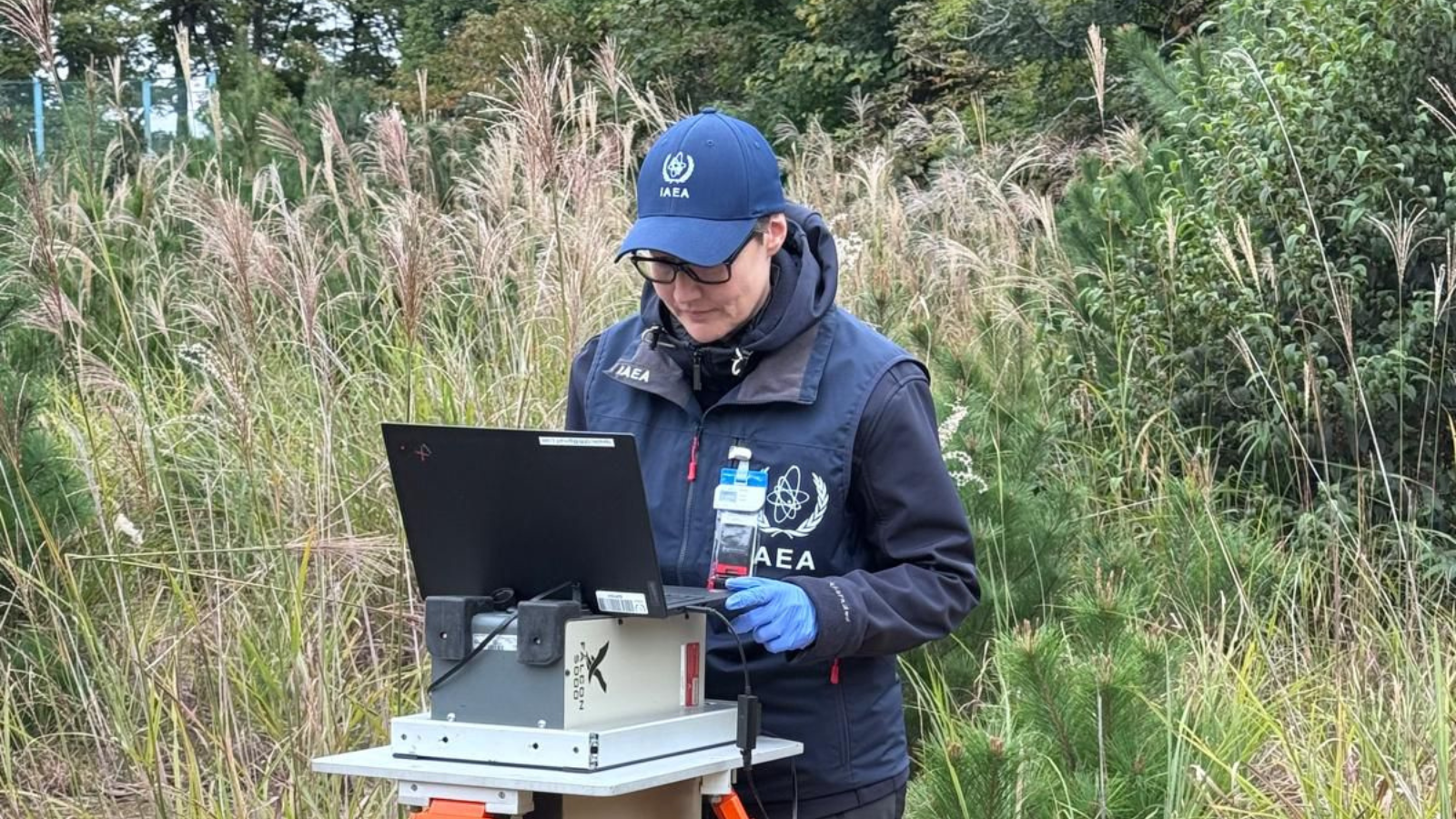
          Participants received a blend of theoretical instruction and hands-on fieldwork in some of Fukushima’s most affected areas. This included radiation monitoring and environmental sampling practice at sites like the former Kumamachi Elementary School in Okuma Town and Yasuragi-Sou, a community home for the elderly in Namie Town — both uninhabited since the disaster. Guided by trainers from the IAEA and Australia’s Nuclear Science and Technology Organisation, attendees used backpack survey systems, gamma spectrometers and contamination monitors to collect and interpret data under real-world conditions.

          IAEA expert prepares field monitoring equipment for gamma spectroscopy measurements during the exercise. (Photo: IAEA).

          Training in a Real World Environment

          A central feature of the training was the use of the IAEA’s International Radiation Monitoring Information System. Participants uploaded field data to a secure training platform, learning how to visualize and analyse results for rapid decision-making during a nuclear or radiological emergency. 

          “Training in a real-world environment — where radiation levels can be measured and emergency responses simulated — equips participants with skills they cannot acquire in a purely theoretical setting,” said Herviou. “This approach is especially valuable for countries like Ukraine, where the ability to respond quickly and effectively to radiological incidents is critical.” 

          The workshop’s international roster included participants from Indonesia, Malaysia, Singapore and Ukraine, underscoring the IAEA’s commitment to capacity building across regions. Japan’s Ministry of Foreign Affairs, a longstanding partner in the IAEA’s emergency preparedness activities, continues to support these efforts, ensuring that the lessons of Fukushima inform global standards and practices. 

          Looking ahead, the IAEA plans further workshops in Japan, such as the RANET Joint Assistance Team Exercise and a workshop on public communication during nuclear emergencies, which includes lessons on mitigating misinformation and disinformation.  

          “The partnership between the IAEA, Japan and participating countries is vital for strengthening global nuclear safety,” Herviou said. “By training together in Fukushima, we are preparing for challenges that know no borders.” 

          Participants collect environmental samples as part of hands-on radiological monitoring training. (Photo: IAEA).

          Related resources

          <dd id="rw0xn"></dd>

        2. <label id="rw0xn"></label>

        3. <sup id="rw0xn"><strike id="rw0xn"></strike></sup><label id="rw0xn"></label>
            <th id="rw0xn"></th>
          1. <var id="rw0xn"></var>
              1. <table id="rw0xn"></table>

                <sub id="rw0xn"><meter id="rw0xn"></meter></sub>
                97碰成人国产免费公开视频