<dd id="rw0xn"></dd>

  • <label id="rw0xn"></label>

  • <sup id="rw0xn"><strike id="rw0xn"></strike></sup><label id="rw0xn"></label>
      <th id="rw0xn"></th>
    1. <var id="rw0xn"></var>
        1. <table id="rw0xn"></table>

          <sub id="rw0xn"><meter id="rw0xn"></meter></sub>

          IAEA Technical Meeting in Japan Helps Strengthen Radiotherapy Expertise

          Medical specialists from Japan’s National Institutes for Quantum Science and Technology sharing their experience and expertise with the IAEA’s network of Rays of Hope Anchor Centres. (Photo: A. McKnight/IAEA)

          An IAEA technical meeting held in Japan earlier this year helped to bolster the capabilities of its Rays of Hope Anchor Centres to serve as regional capacity building hubs. Recognizing the global need for an expanded radiation oncology workforce, the IAEA has been assisting Anchor Centres in supporting professionals in adopting techniques to treat cancers of the liver, lung, pancreas, uterus, ovary and cervix. 

          “Radiotherapy advancement is about equity — ensuring every patient benefits from the latest technologies and the best chance at life,” said Catherine Mwaba, an IAEA radiation oncologist. “Through Rays of Hope, Anchor Centres are strengthened as regional training hubs, building capacity to empower surrounding centres and transform equitable access from vision into reality. They help by sharing their expertise in radiation oncology, hosting IAEA fellows and organizing capacity-building trainings and events for others.”

          A Growing Global Cancer Need

          To meet the projected surge in cancer cases, the global cancer workforce must expand by more than 60 percent from its 2022 levels, the IAEA-led Lancet Oncology Commission on Radiotherapy and Theranostics has noted. In concrete terms, this amounts to over 84?000 radiation oncologists, 47?000 medical physicists and 141?000 radiotherapy technologists by 2050 — all of whom must be well-equipped and well-trained to face this demand.  

          In supporting the development of a well-trained global radiation oncology workforce, the IAEA organized a four-day technical meeting in August — supported by extrabudgetary contributions from Japan — at the National Institutes for Quantum Science and Technology (QST), one of the 16 institutes which comprise Japan’s Anchor Centre.  

          “QST’s mission is to advance quantum and radiological sciences and technologies through its strong commitment to research and development in quantum science and technology,” said Keiko Nakayama, Executive Director of QST. “We have high hopes that this technical meeting will play a vital role in the success of the IAEA Rays of Hope project, help enhance radiation therapy for patients with various types of cancer, and support the improvement of medical care in low- and middle-income countries.” 

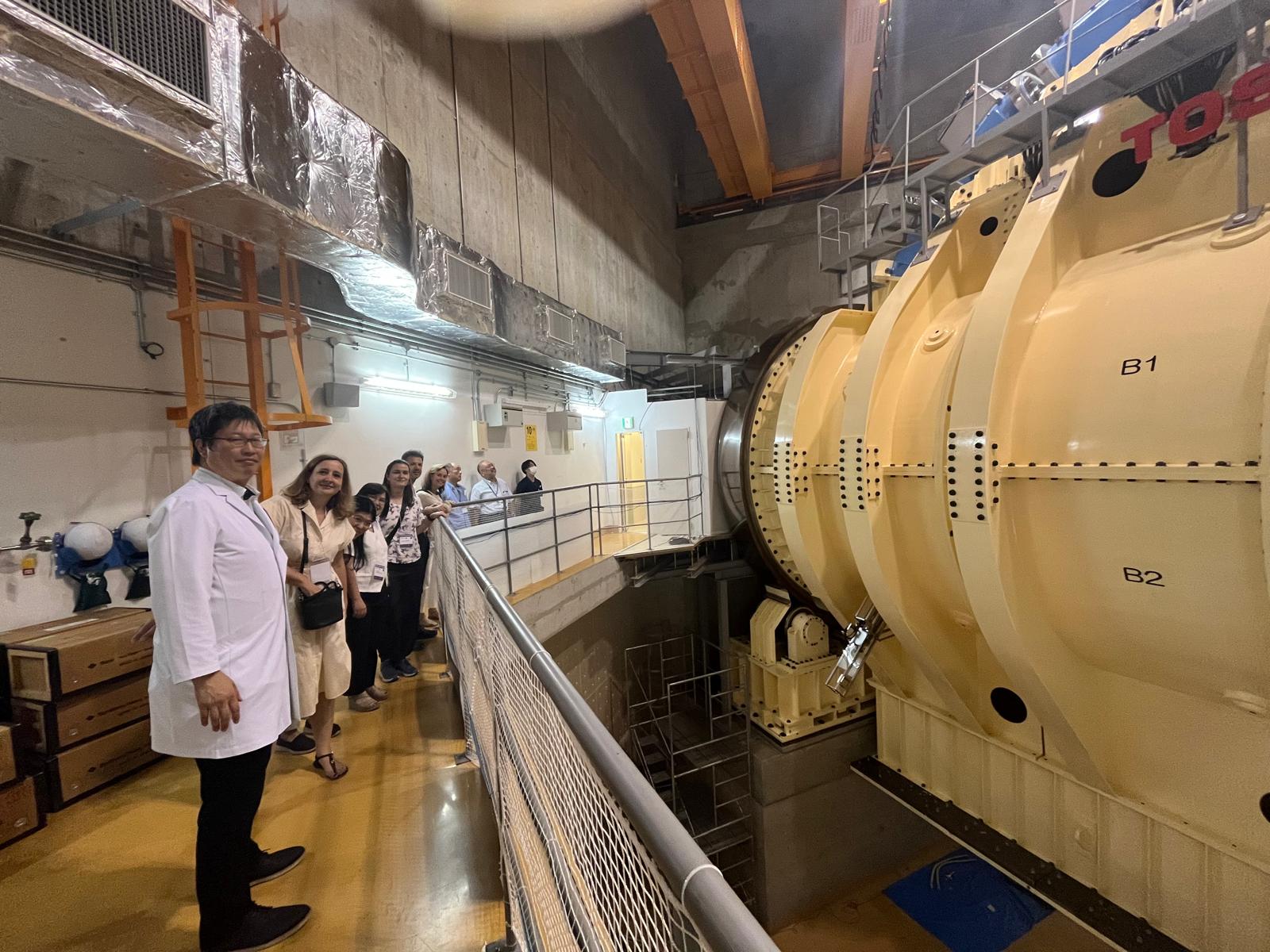
          Radiation oncology professionals from Rays of Hope Anchor Centres observe the gantry mechanism for carbon-ion therapy at Japan’s National Institutes for Quantum Science and Technology. (Photo: A. McKnight/IAEA)

          Strengthening Radiotherapy Expertise

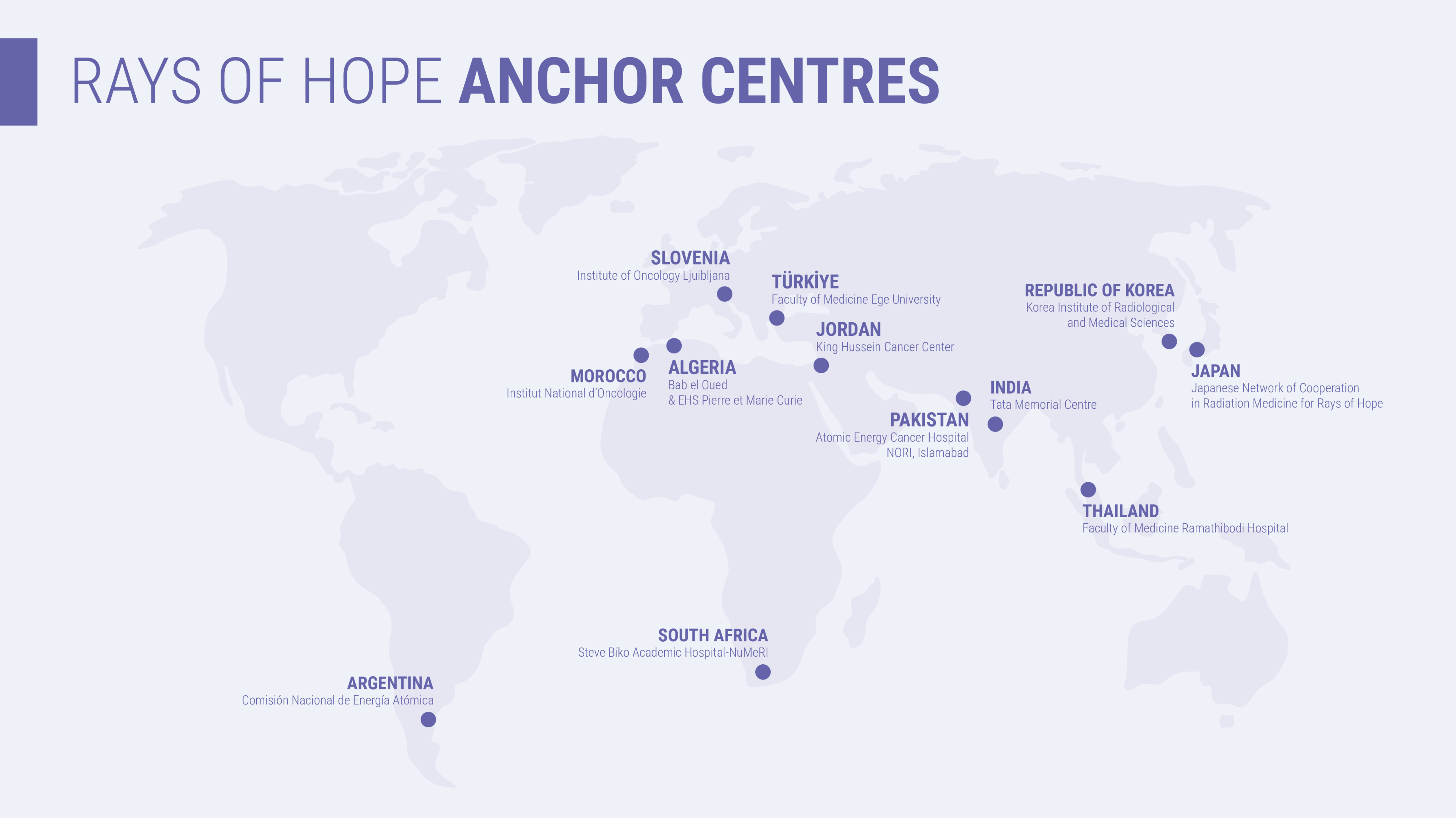
          Through hands-on sessions and lectures led by QST’s experts, radiation oncologists and medical physicists from the IAEA’s Anchor Centres in Algeria, Argentina, India, Japan, Jordan, Morocco, Pakistan, Republic of Korea, Slovenia, South Africa, Thailand and Türkiye strengthened their clinical knowledge of advanced treatment techniques. The technical meeting covered key topics including: 

          • stereotactic body radiation therapy (which utilises very high doses of radiation from several beams at different angles to target well-defined, small tumours over a few treatment sessions) 
          • image-guided radiation therapy (which utilises real-time imaging to accurate pinpoint the tumour’s location either before or during each treatment session) 

          Participants also explored the radiobiology of light ion therapy, gaining insights into the underlying biological mechanisms of how carbon ions and protons interact with cancer cells. Dedicated sessions on the physics behind these advanced therapies similarly enabled attendees to enhance their understanding of effective beam delivery, related quality assurance processes and equipment performance audits. Special sessions on clinical applications underscored the value of these techniques by demonstrating real-world outcomes.  

          Visits to QST’s various treatment rooms provided participants with a first-hand look at the clinical integration of these techniques. In learning from Japan’s experience and sharing their own practices, participants reflected on their own approaches in implementing such treatments. As a result of the technical meeting, Anchor Centres are now better equipped to support neighbouring countries, institutes and facilities in adopting, applying and advancing these cutting-edge radiotherapy techniques. 

          “My stay in Chiba, Japan, for the advanced radiotherapy techniques workshop was an inspiring and enriching experience,” said Ajra ?e?erov Ermenc, a radiation oncologist from the lnstitute of Oncology Ljubljana, the Rays of Hope Anchor Centre in Slovenia. “I had the opportunity to connect with colleagues from all over the world, exchange ideas, and learn from true experts in the field.”

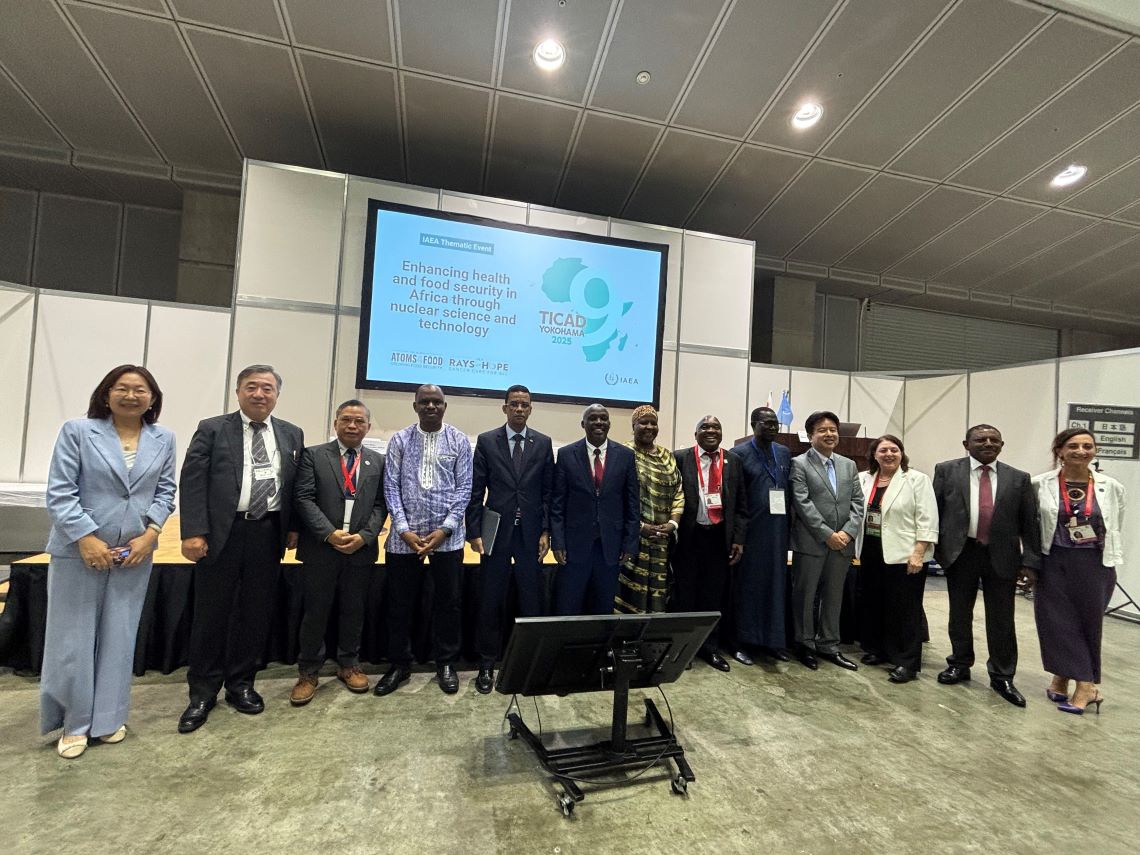
          IAEA Division of Human Health Director May Abdel-Wahab delivering opening remarks at the August 2025 technical meeting on advanced radiotherapy in Japan. (Photo: National Institutes for Quantum Science and Technology)

          <dd id="rw0xn"></dd>

        2. <label id="rw0xn"></label>

        3. <sup id="rw0xn"><strike id="rw0xn"></strike></sup><label id="rw0xn"></label>
            <th id="rw0xn"></th>
          1. <var id="rw0xn"></var>
              1. <table id="rw0xn"></table>

                <sub id="rw0xn"><meter id="rw0xn"></meter></sub>
                97碰成人国产免费公开视频