IAEA Nuclear Stakeholder Engagement School Marks Third Edition
Practical tools and real-world insights took centre stage at the third edition of the Nuclear Stakeholder Engagement School, reaffirming that effective stakeholder engagement is a strategic investment in the success of nuclear power programmes.

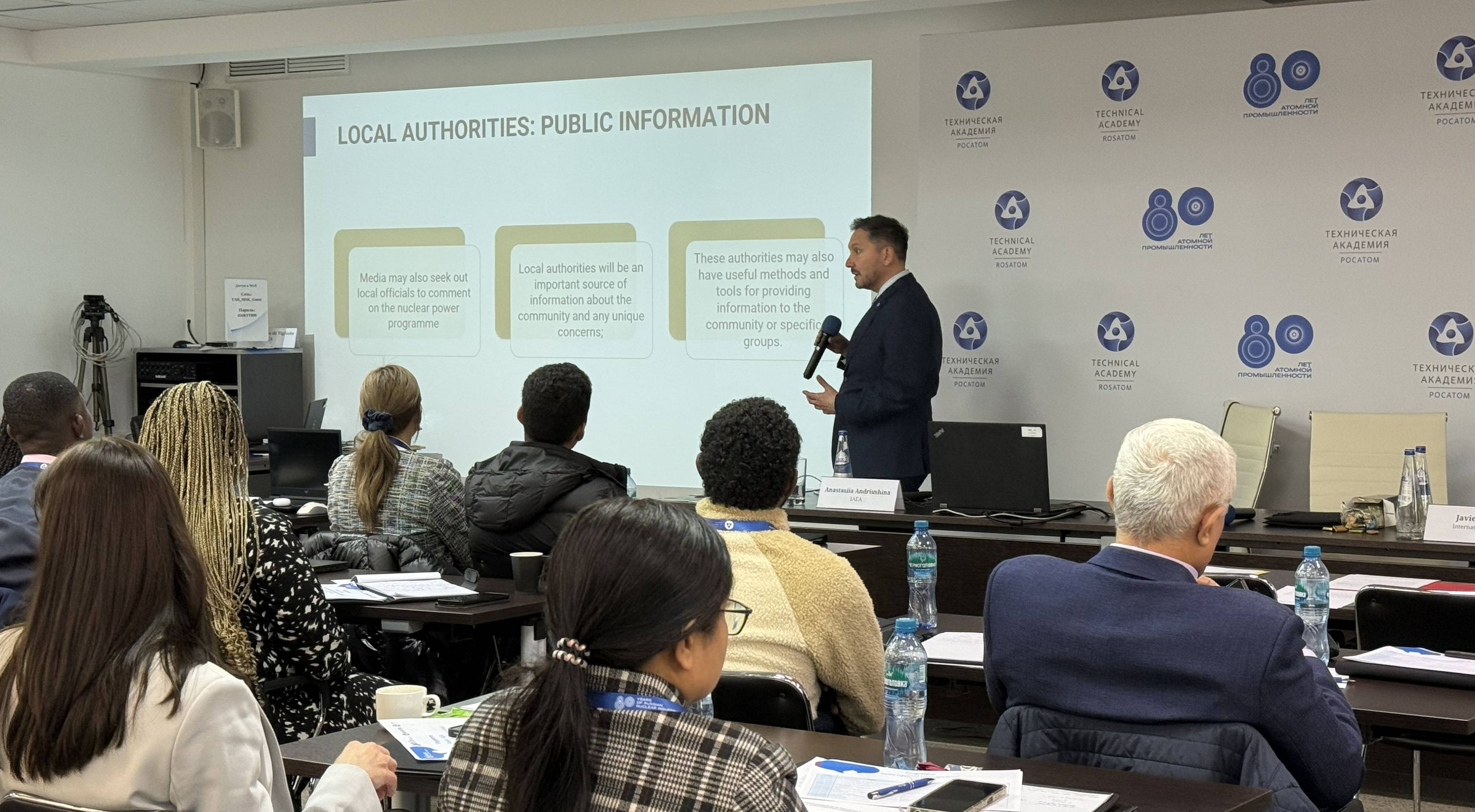
Participants discuss group activity during the Nuclear Stakeholder Engagement School, held from 3 to 7 November 2025. (Photo: IAEA)
Practical tools and real-world insights took centre stage at the third edition of the Nuclear Stakeholder Engagement School, reaffirming that effective stakeholder engagement is a strategic investment in the success of nuclear power programmes.
Through interactive learning approaches and case studies, participants from 24 countries learned how to plan and deliver effective engagement throughout the lifecycle of nuclear projects.
“Stakeholder engagement is not a one-off activity but a strategic, ongoing investment of time and resources,” said Andrea Borio di Tigliole, Programme Coordinator in the IAEA Department of Nuclear Energy and Scientific Secretary of the school. “By involving a broad range of actors – from technical experts and regulators to government agencies and host communities – we can shape nuclear power programmes that are not only technically sound but also socially resilient.”
Building stakeholder confidence goesbeyond office-based planning. It requires collaboration across disciplines, roles and perspectivesand strong leadership.
“Effective stakeholder engagement isn’t a ‘nice-to-have’ - it is mission-critical for any country pursuing nuclear energy. This school brings together the real-world experience, technical insight, and leadership development needed to build lasting confidence in nuclear programmes. We were honored to host and to support the important work the IAEA is doing around the world,” said Aleshia Duncan, Deputy Assistant Secretary for International Cooperation in the US Department of Energy’s Office of Nuclear Energy, which hosted the school in Washington, DC in November.
Practical Tools and Real-World Insights
The school brought together representatives from government agencies, regulatory bodies, operating organizations, and technical support organizations. They explored a variety of tools and methods for stakeholder engagement, learned how to develop engagement frameworks and strategies, and practiced risk perception assessment to better understand stakeholder concerns.
Sessions on communication channels and digital media, crisis and emergency communication, and strategies to counter misinformation sparked discussions on effective techniques for addressing practical challenges. Immersive workshops strengthened participants’ leadership skills, while case studies in areas including regulatory body engagement, host community dialogue and radioactive waste management offered firsthand lessons from experienced engagement practitioners in the host country.
Global Perspectives and Insights
Countries at different stages of nuclear power development shared their perspectives. Poland is pursuing its nuclear ambitions to lower emissions and strengthen energy security, with site selection and public consultations already underway.
“This experience strengthens our ability to communicate transparently, address public expectations, and support Poland’s efforts to implement a safe, modern, and socially accepted nuclear programme,” said Dorota Chandavoine, Communications and Social Programmes Manager at the Polskie Elektrownie Jadrowe, a nuclear power reactor developer in Poland.
Ghana is developing its regulatory framework and pursuing a robust stakeholder engagement strategy to enhance public understanding, foster support and build trust in its programme.
“Attending this school was vital for strengthening our mandate, since effective communication and continuous engagement are critical to our work,” said Francis Otoo, Director General of the Ghana Nuclear Regulatory Authority. “The programme provided practical tools and insights that will directly enhance the revision of our stakeholder engagement strategy, ensuring that we can transparently communicate, build trust, and engage inclusively with all interested parties in Ghana’s nuclear power programme as an independent and competent authority.”
Building Capacity for Building Confidence
With renewed global interest in nuclear energy as a low carbon, reliable power source, participants agreed that the human dimension of nuclear programmes is as critical as the technical one. Open and honest communication with communities, local authorities, and national stakeholders can transform uncertainty into understanding and build long-term confidence.
The Stakeholder Engagement School is part of the IAEA’s broader effort to support Member States in building the human and institutional capacities needed for the safe, secure and responsible development of nuclear energy.
Learn more about our stakeholder engagement activities here.
The next edition of the school will be held jointly with the Abdus Salam International Centre for Theoretical Physics (ICTP) in Trieste, Italy from 23 to 27 November 2026. The call for applications will be announced on both ICTP and IAEA websites.