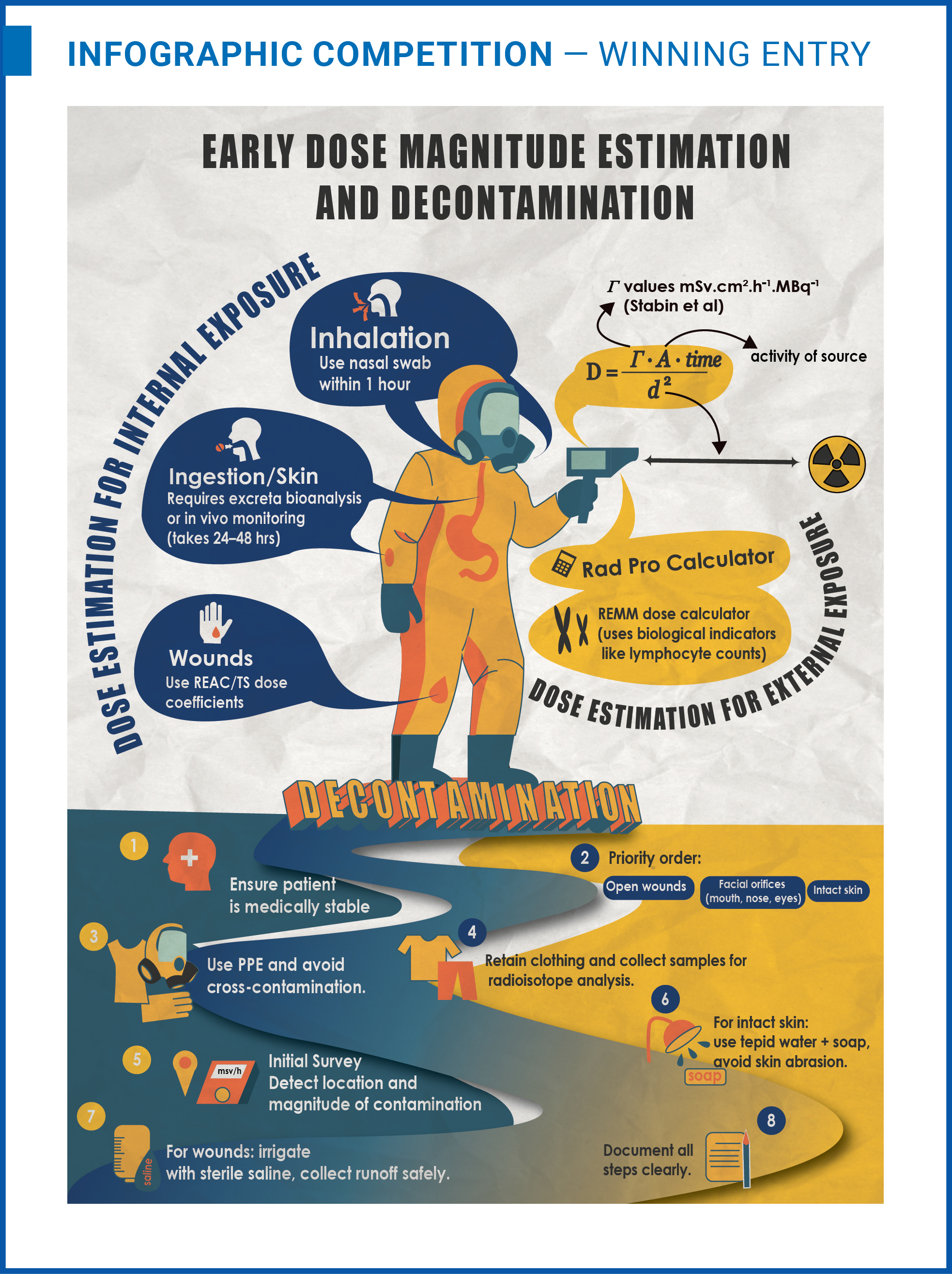
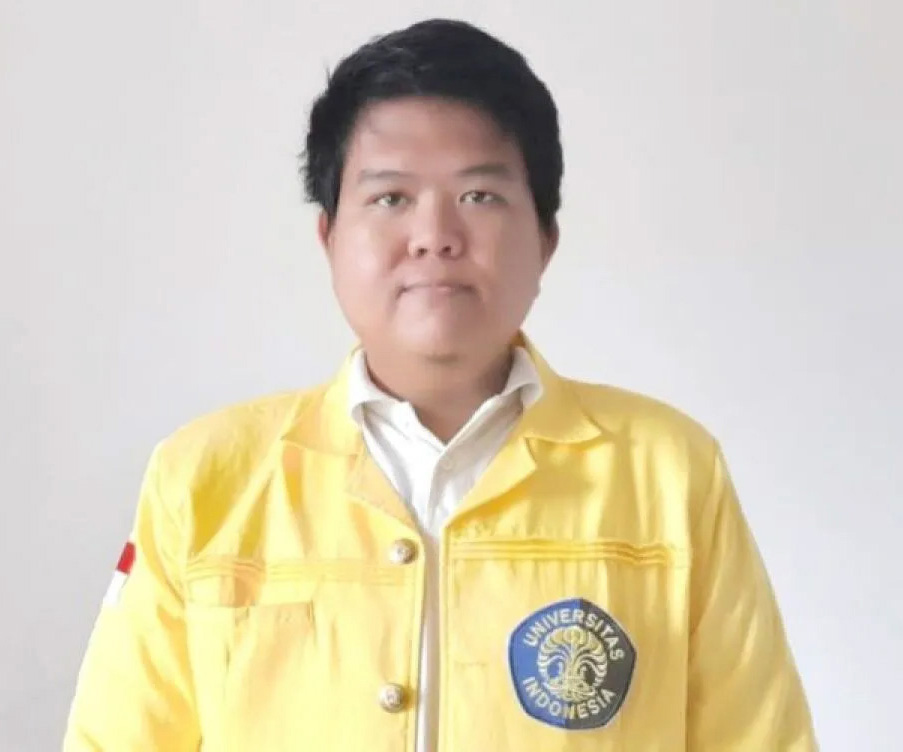
The top entry came from Antonius Fajar Adinegoro, a medical physics resident in nuclear medicine at Hasan Sadikin Hospital in Bandung, Indonesia.
“This infographic stood out to the judges because it takes one of the most technical areas of emergency preparedness and response — dose estimation and decontamination after a radiological incident — and makes it both clear and practical. It shows exactly what medical physicists need to do, step by step, in a way that is accurate, accessible and visually engaging. That combination of scientific precision and real-world usability is what made it the judges’ top choice,” said Bethsaida Zamora, the IAEA’s coordinator for this contest.
“I work with open radiation sources every day, which makes preparedness feel essential,” said Adinegoro. “I wanted to make those concepts understandable for both professionals and stakeholders.”
The contest supports the aim of the IAEA’s 2025 International Conference on Nuclear and Radiological Emergencies: to ensure that EPR is ready to meet the evolving challenges of the future. The top five contest winners have been invited to present their infographics at the conference, which takes place in Riyadh, Saudi Arabia, from 1 to 4 December 2025. Their work will also be showcased at IAEA Headquarters in Vienna.
Submissions were judged on visual clarity, technical accuracy, originality, thematic relevance and overall impact.
“This contest shows how important it is to involve young people in nuclear and radiological emergency preparedness and response,” said contest judge Yousef Alzaben, General Manager of the Department of Nuclear Emergencies at Saudi Arabia’s Nuclear and Radiological Regulatory Commission. “They bring fresh perspectives and creative ways of communicating complex issues — approaches that can reach audiences we might not otherwise engage.”
The hope is that the winning designs, and many other entries, will be used as practical communication tools by emergency organizations and communities around the world.